Articles on Vein Disease

Vein disease is poorly understood, and a great deal of what patients are told about it is out of date. These articles are written by Dr Johan Blignaut from his own consulting-room experience, and are reviewed and updated as clinical practice changes.

Articles for patientsArticles for doctors

Illustration of a lower leg with veins intertwined with a DNA double helix, titled Varicose Veins and Genetics.

Understanding Vein Disease

Is It in Your Genes? The Genetics of Varicose Veins

Dr Johan Blignaut 17 min read

Varicose veins often run in families — but there is no single varicose vein gene. I explain how strongly they are inherited, what the large genetic studies have found, the genes researchers are watching most closely such as PIEZO1, why a genetic test will not help with ordinary varicose veins, and what a family history means for your assessment and treatment.

Read the article
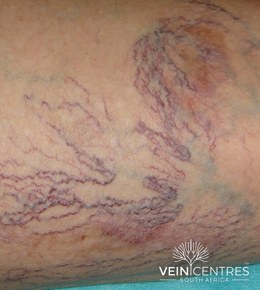
Photograph of extensive red and purple spider veins on the leg, with bluish feeder veins beneath them.

Vein Conditions & Symptoms

Spider Veins: Cosmetic or Medical?

Dr Johan Blignaut 20 min read

Most spider veins are a cosmetic concern — but some are the visible sign of a leaking vein deeper in the leg. I explain why spider veins appear and suddenly spread, whether they are dangerous, when they cause symptoms, who needs a duplex scan, how sclerotherapy and laser compare, what treatment can realistically achieve, and when medical aid pays.

Read the article

Vein Conditions & Symptoms

DVT: The Blood Clot Everyone Fears

Dr Johan Blignaut 18 min read

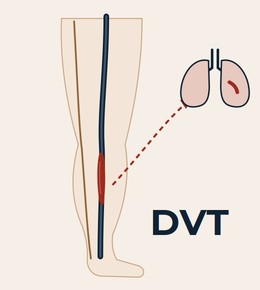
A blood clot in the leg frightens almost everyone, but much of that fear comes from not knowing which risks are real. I explain what a DVT is, the warning signs that need same-day or emergency care, who is genuinely at risk, what flights, the pill and pregnancy really add, how treatment works under current guidelines, and how clot risk is managed around varicose vein treatment.

Read the article
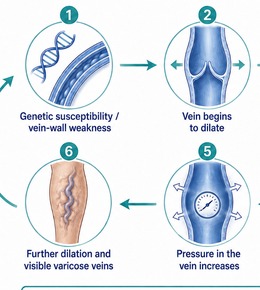
Diagram showing genetic susceptibility, vein dilation, valve failure, reflux and increased venous pressure leading to varicose veins.

Understanding Vein Disease

What Actually Causes Varicose Veins?

Dr Johan Blignaut 12 min read

Patients usually ask how to get rid of the vein they can see. The more useful question is why it is there at all. I explain how genetic susceptibility, changes in the vein wall, failing valves and venous reflux interact, why risk factors such as standing, pregnancy, weight and height are not the same as causes, and why the visible vein is so often fed by reflux somewhere else entirely.

Read the article
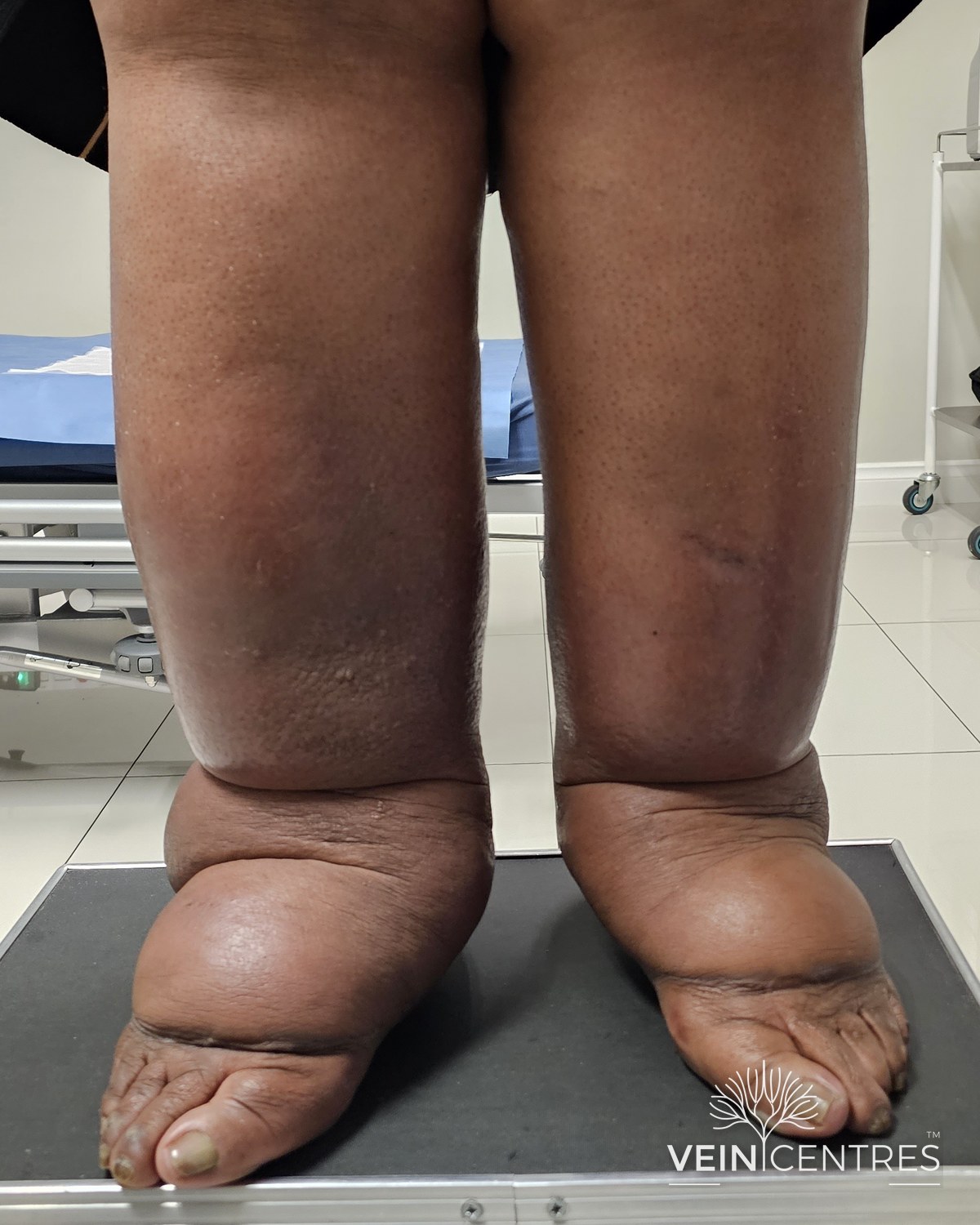
Bilateral leg swelling extending into the feet and toes

Vein Conditions & Symptoms

When Leg Swelling Is — and Is Not — Caused by Veins

Dr Johan Blignaut 7 min read

Swollen legs are one of the most common reasons patients arrive at my rooms, and they are very often blamed on the veins. Sometimes that is right — often it is not. I explain the pattern that points to vein disease, the alternatives that are regularly missed (lymphoedema, cardiac causes, medication, lipoedema and DVT), and how a duplex ultrasound settles the question either way.

Read the article

Articles for Doctors

Practical guidance for general practitioners and other referring clinicians: when to refer, what a duplex ultrasound report means, and how vein disease is assessed and treated in current practice. These articles are written by Dr Johan Blignaut for medical colleagues and assume clinical knowledge.

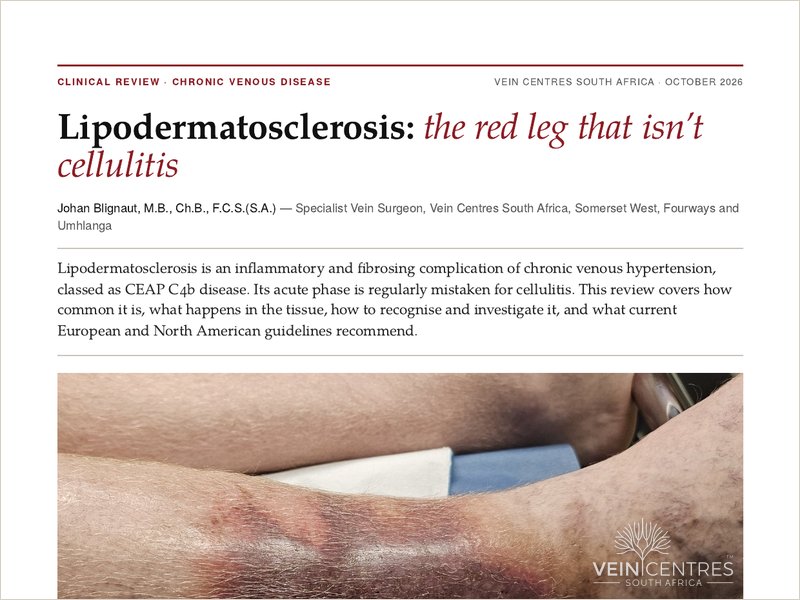
First page of the clinical review Lipodermatosclerosis: the red leg that isn’t cellulitis, showing a red-violaceous plaque above the ankle.

For Doctors · Clinical Review

Lipodermatosclerosis: The Red Leg That Isn’t Cellulitis

Dr Johan Blignaut PDF · 9 pages · 1.9 MB

A clinical review of lipodermatosclerosis (CEAP C4b), the inflammatory and fibrosing complication of chronic venous hypertension whose acute phase is regularly treated as cellulitis. It covers prevalence, pathophysiology, recognition in darker skin, distinguishing LDS from cellulitis, investigation, current ESVS, UIP and SVS guidance, management and when to refer.

Read the summary Download PDF
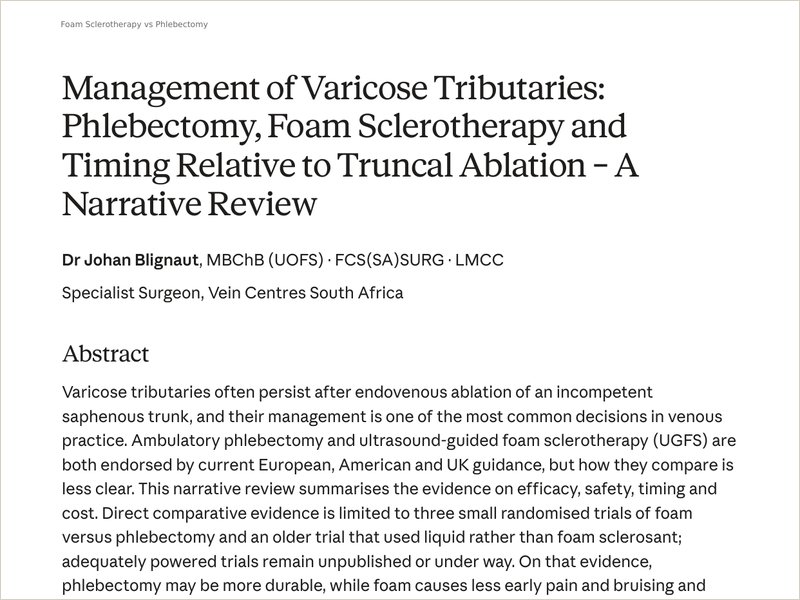
First page of the narrative review Management of Varicose Tributaries: Phlebectomy, Foam Sclerotherapy and Timing Relative to Truncal Ablation.

For Doctors · Clinical Review

Management of Varicose Tributaries: Phlebectomy, Foam Sclerotherapy and Timing Relative to Truncal Ablation

Dr Johan Blignaut PDF · 16 pages · 0.4 MB

A narrative review of the evidence on treating varicose tributaries: ambulatory phlebectomy versus ultrasound-guided foam sclerotherapy, treating tributaries at the same sitting as truncal ablation or later, and the tributary-first ASVAL approach. It compares efficacy, recurrence, complications, recovery and cost, and sets out how the choice is made in practice.

Read the summary Download PDF

To refer a patient, use our medical / nursing practitioner referral form or call the nearest vein centre.