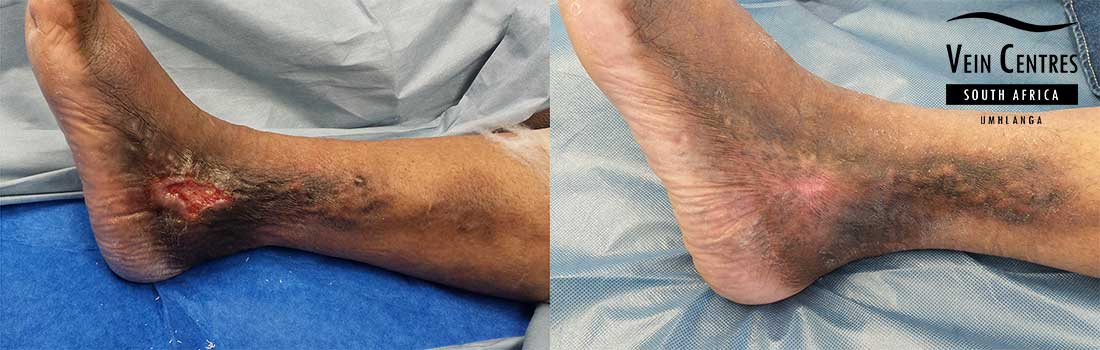
Why won't my leg ulcer heal?
Most leg ulcers that won't heal are venous ulcers. They are caused by high pressure in the leg veins, and they rarely heal for good until that pressure is treated. Dressings protect the wound, but they don't lower the pressure in the veins underneath it. Compression helps the wound heal, and treating the faulty veins removes the cause. Most patients need both. Without vein treatment, more than half of healed ulcers come back within four years.
Reviewed by Dr Johan Blignaut, Specialist Surgeon · October 2026
From the consulting room
"Many of the patients I see have dressed their ulcer for months, sometimes years, and nobody has ever scanned their veins. Once we find and close the faulty vein, a wound that resisted every dressing often starts to heal within weeks." – Dr Johan Blignaut
The short version
- A venous ulcer is an open wound, usually just above the inner ankle, caused by faulty leg veins.
- Firm compression (tight bandages or special stockings) helps the wound heal, but the blood flow in your arteries must be checked first.
- Treating the faulty veins early, alongside compression, heals ulcers faster than delaying vein treatment.[1]
- Treating faulty veins just under the skin also makes it much less likely that the ulcer will come back.[3, 4]
- In our experience, smaller ulcers usually heal within 4 to 6 weeks once the faulty veins are treated.
- Our nursing sisters do your dressings and compression at our centres, and ulcer patients are usually seen within the same week.
- Treatment is needed for your health, not for looks, and most medical schemes pay for part or all of it.
What is a venous leg ulcer?
A venous leg ulcer, also called a venous stasis ulcer or varicose ulcer, is an open wound on the lower leg that fails to heal because of high pressure in the leg veins. Most appear on the lower leg just above the inner ankle bone (doctors call this the gaiter area), although large ulcers can wrap around much of the lower leg.
What does a venous ulcer look like?
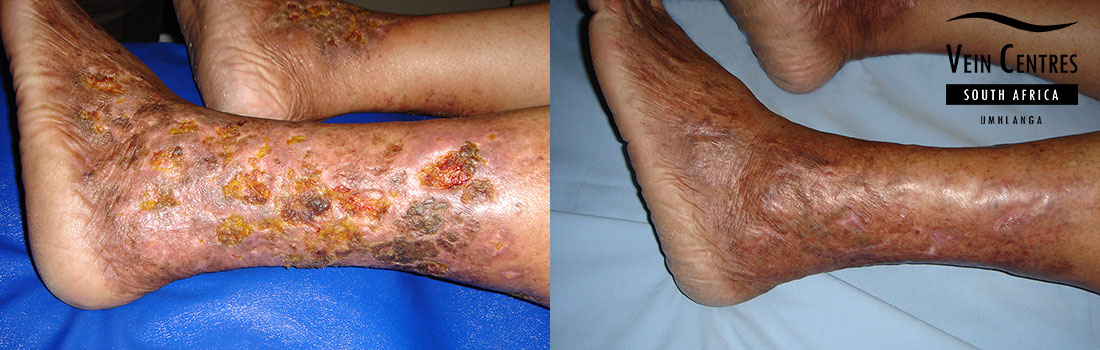
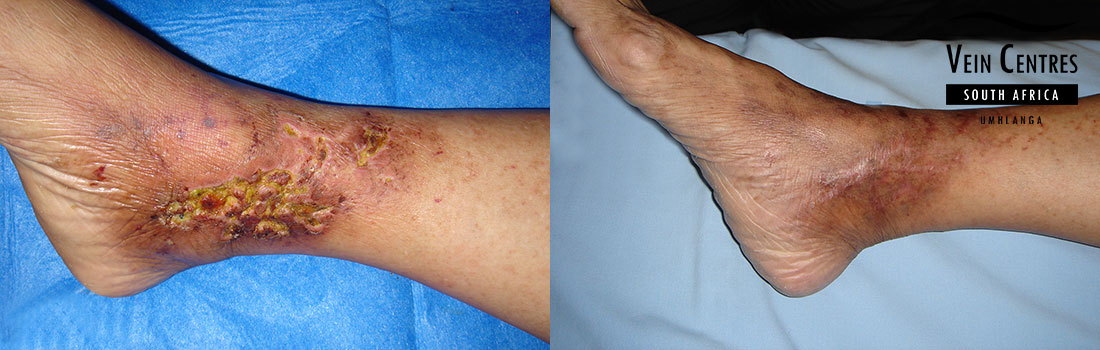
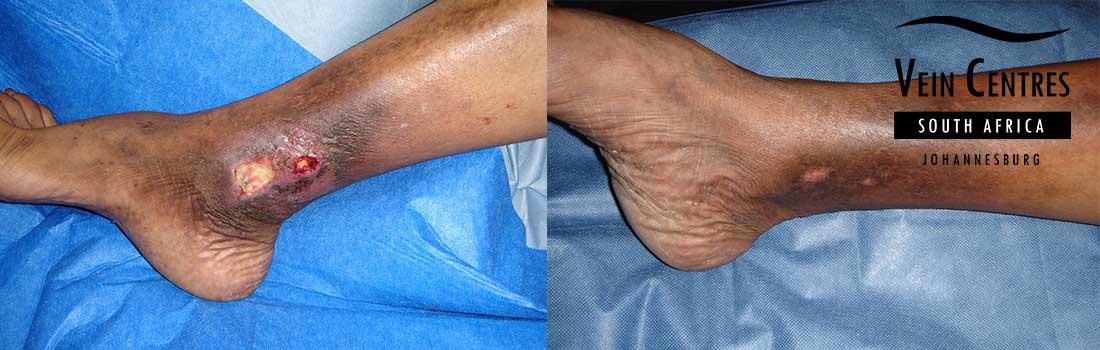
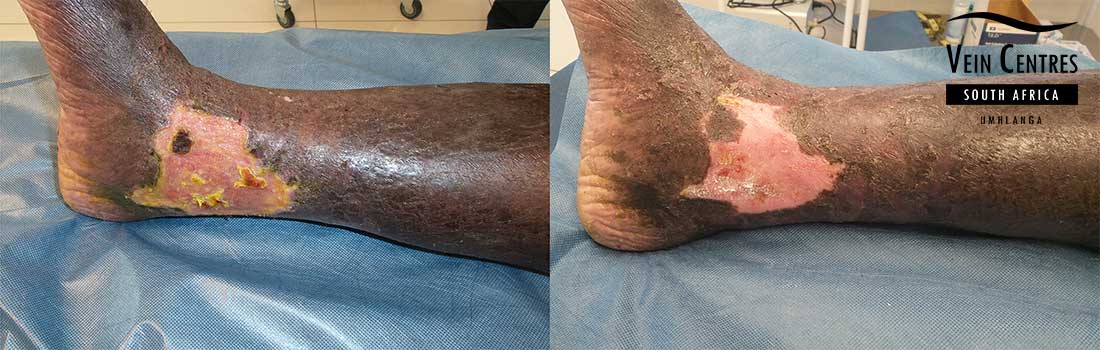
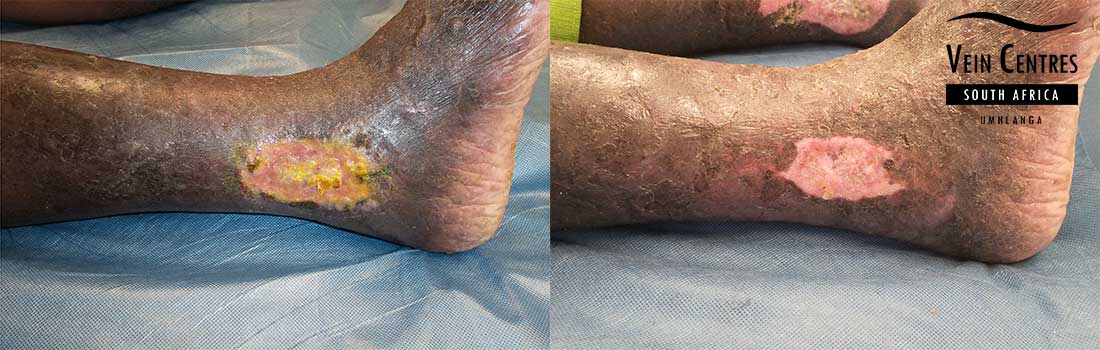
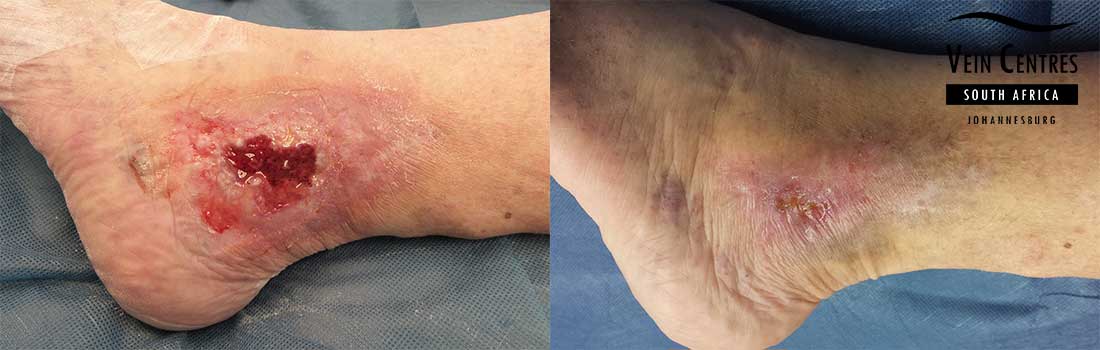
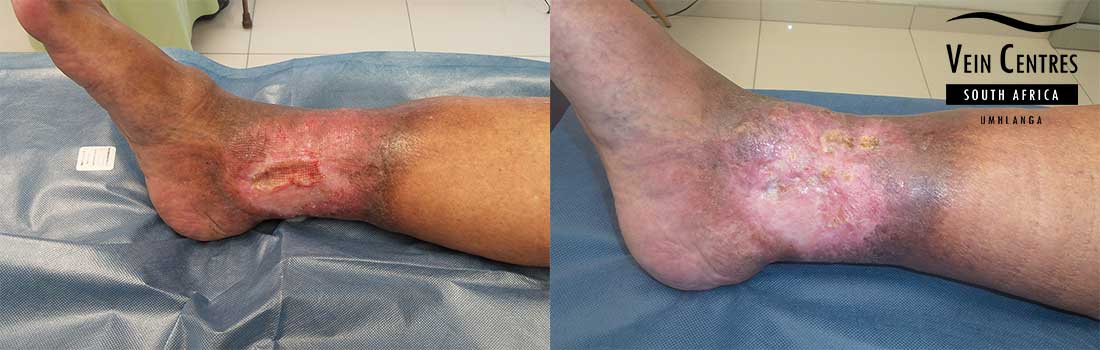
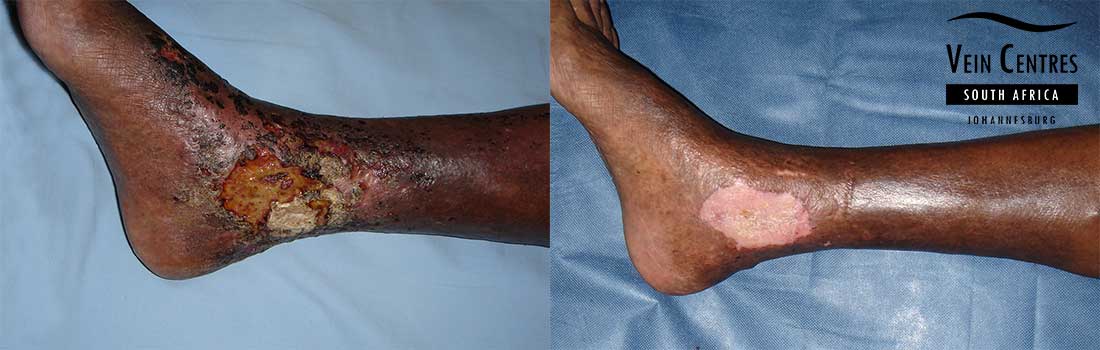
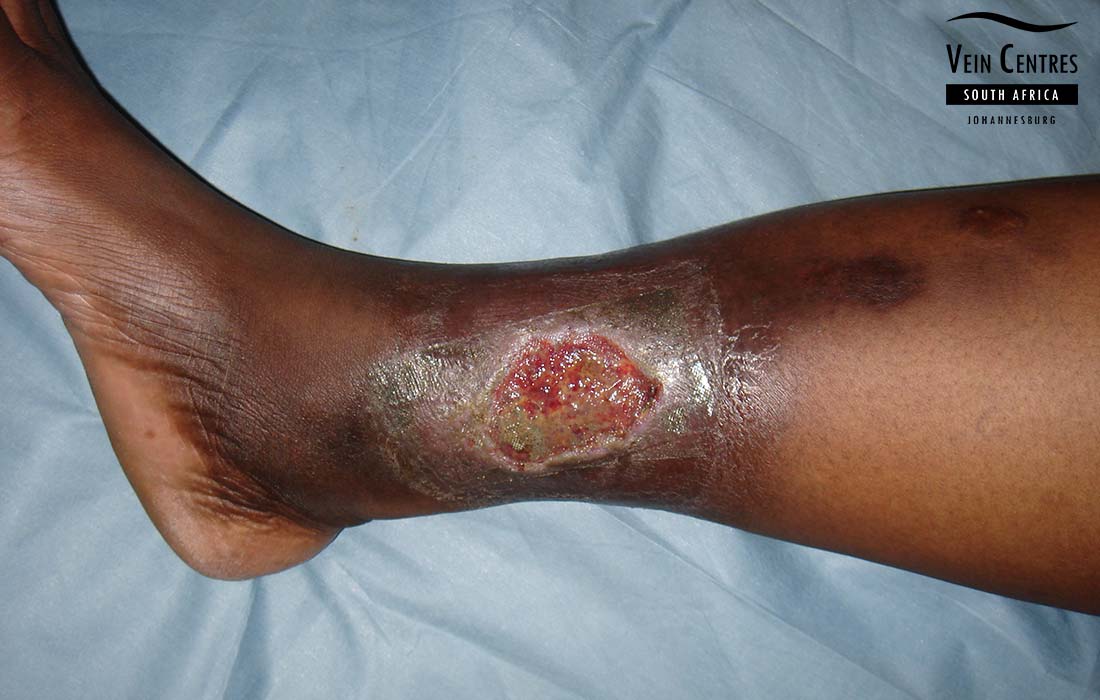
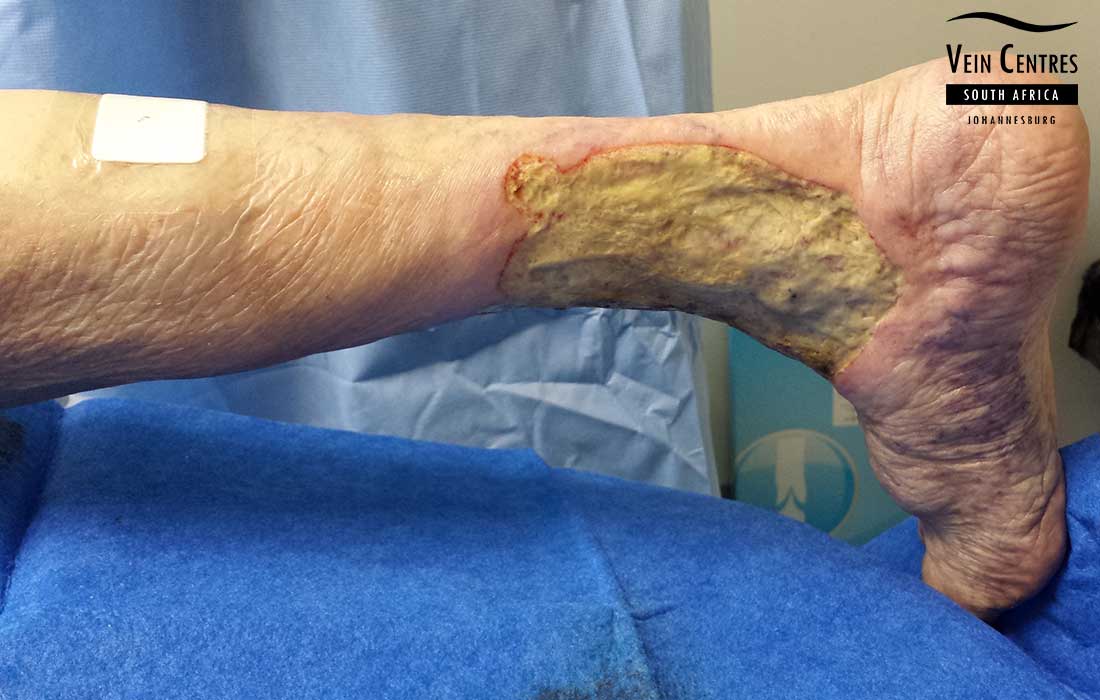
A typical venous ulcer is shallow, with an irregular edge and a pink-red base. It often oozes a lot of fluid. The surrounding skin is usually changed as well: brown staining, dry and itchy skin (venous eczema), and hard, tight, tender skin known as lipodermatosclerosis. Many patients also have visible varicose veins and ankle swelling, but not all do.
The photos below show venous ulcers before treatment.
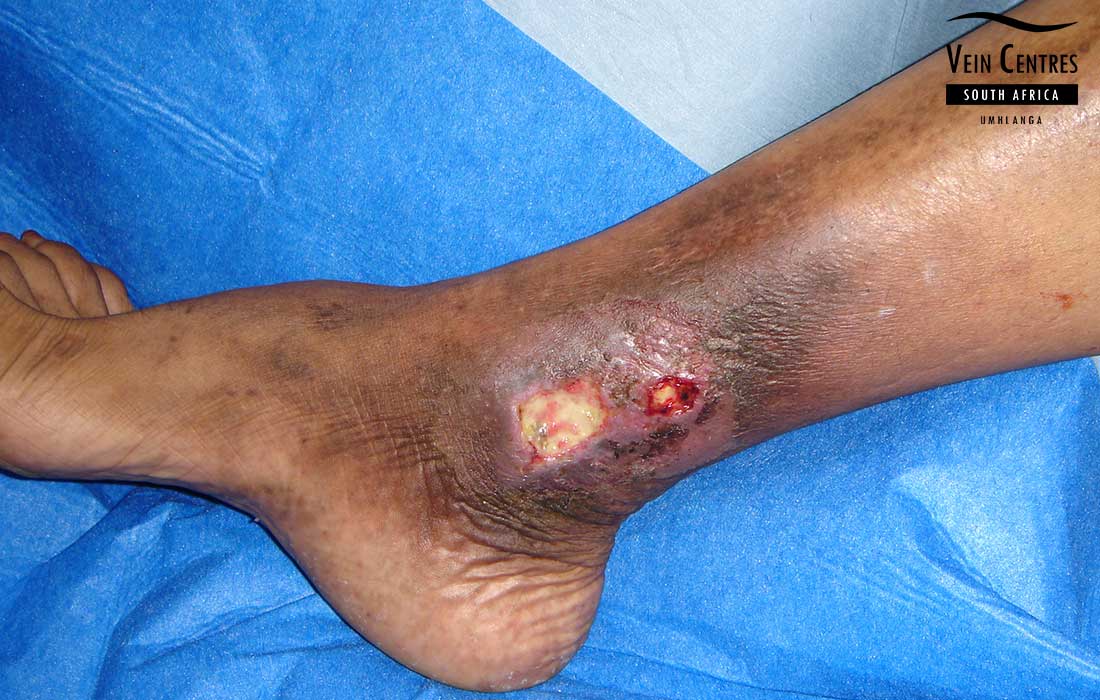
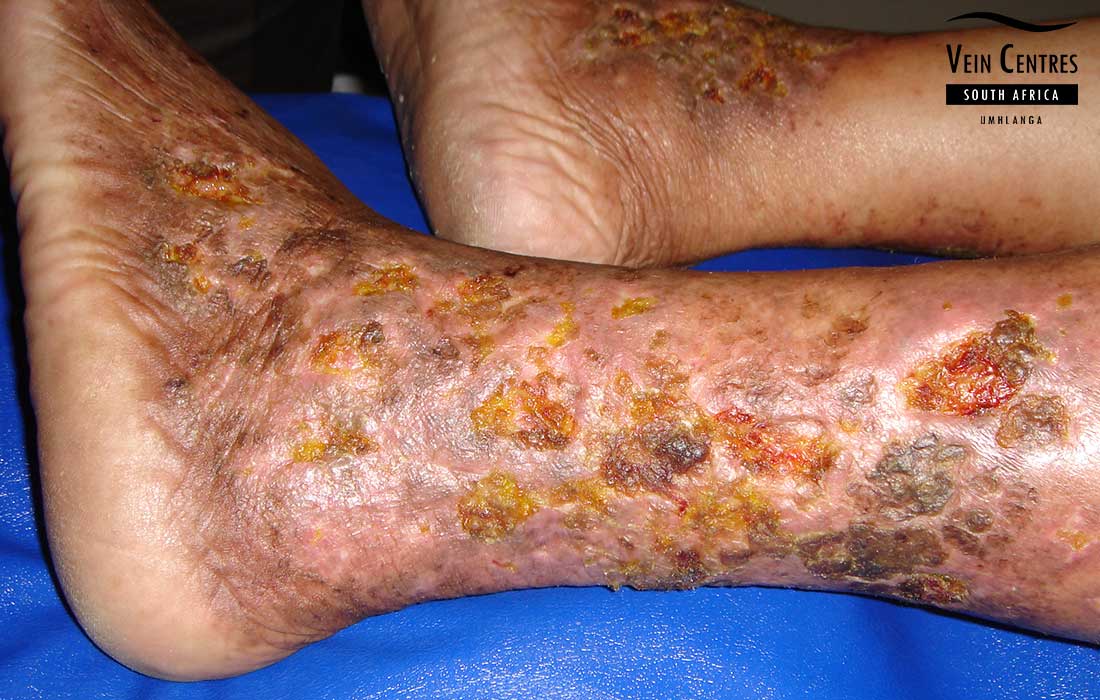
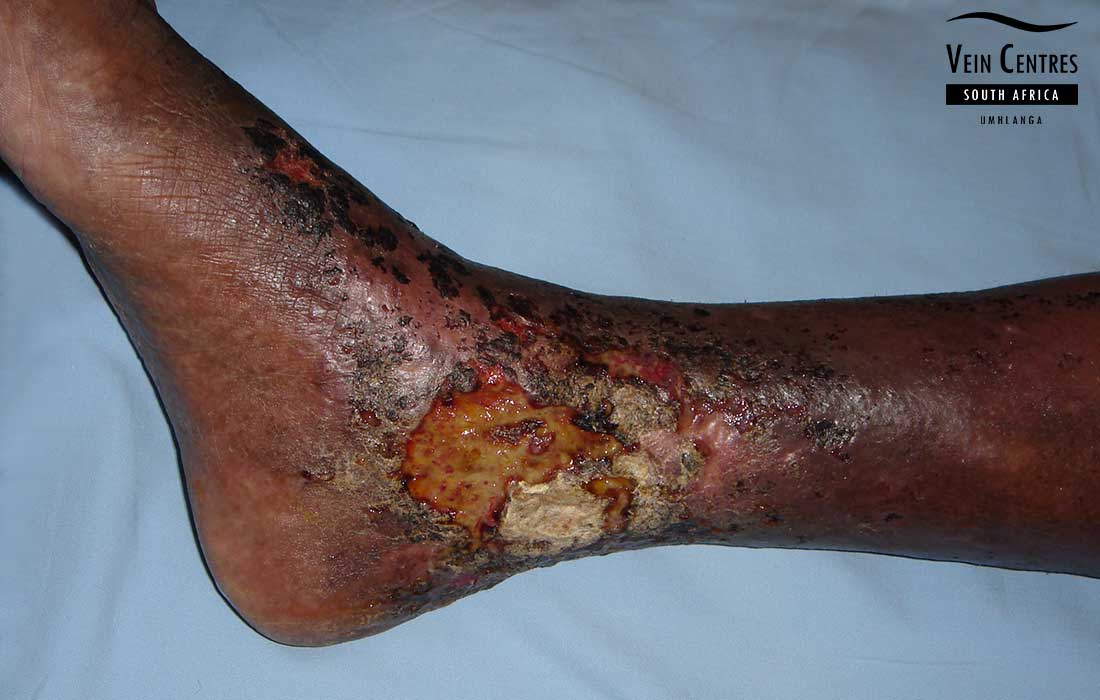
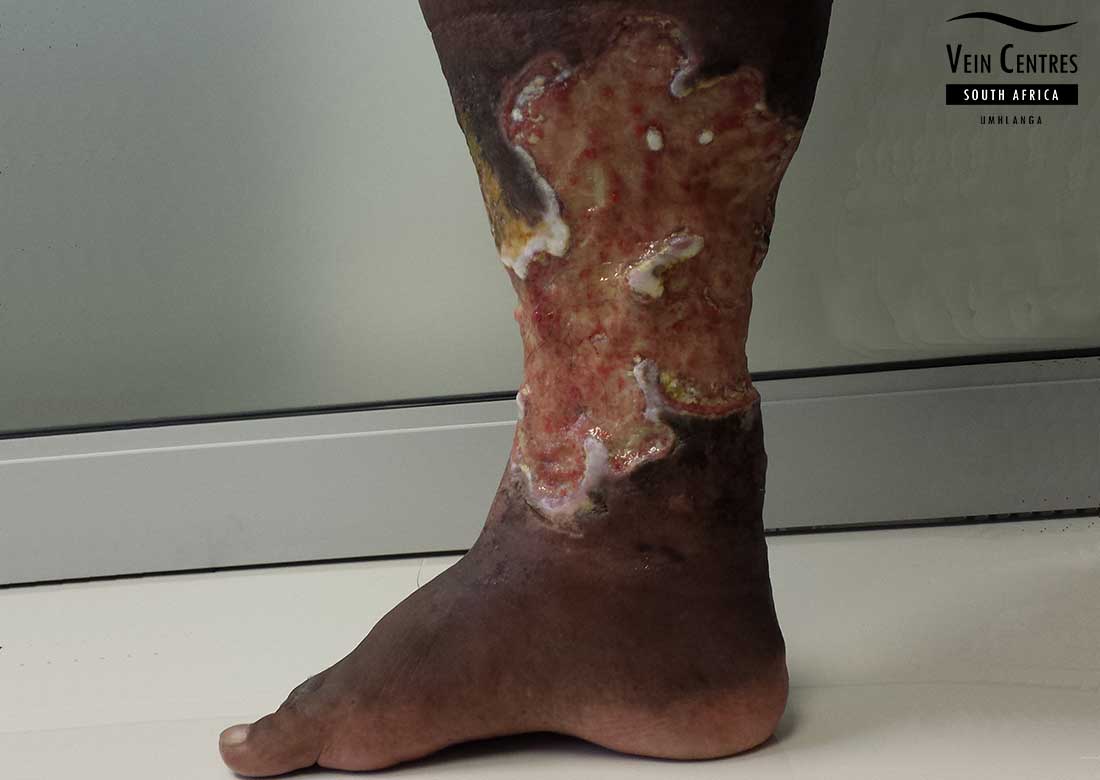
Venous ulcers are the most common type of leg ulcer.[5, 6] They must still be told apart from arterial, diabetic and other ulcers, because the treatment is very different. A treatment that helps one type, such as firm compression, can harm another.
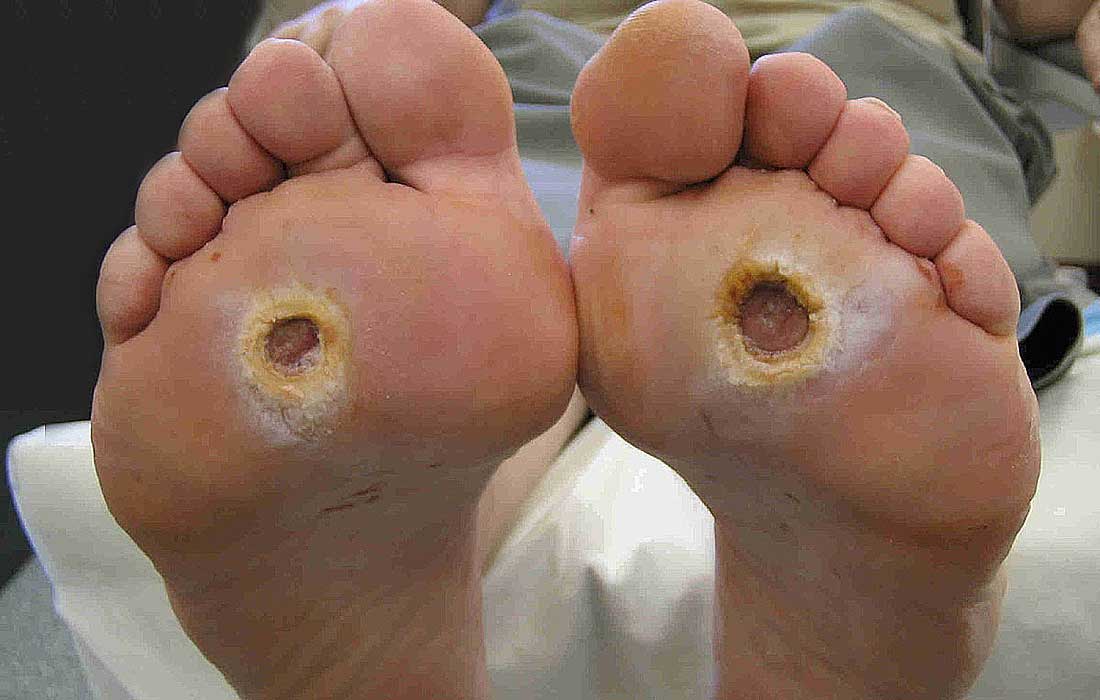
Venous, arterial or diabetic ulcer: how to tell the difference
These are the typical features of each type. Some ulcers are mixed, with both venous and arterial disease, and less common causes include inflammatory conditions of the blood vessels and skin. A proper assessment is always needed.
| Venous ulcer | Arterial ulcer | Diabetic (neuropathic) ulcer | |
|---|---|---|---|
| Usual site | Gaiter area, above the inner ankle | Toes, heel, outer ankle, shin or other pressure points | Sole of the foot and pressure points |
| Appearance | Shallow, irregular edge, red base, sometimes covered with yellow dead tissue (slough); oozes a lot | Deep, with a sharp edge as if cut out, pale, yellow or black base, little fluid | Sharp-edged, surrounded by thick, hard skin (callus) |
| Pain | Aching and heaviness, eased by raising the leg | Often severe, worse at night or with the leg raised, eased by hanging the leg down | Often painless because of nerve damage |
| Surrounding skin | Brown staining, eczema, hardening, swelling, varicose veins | Cool, shiny, thin and hairless skin | Dry skin, callus, foot deformity |
| Foot pulses | Usually present | Weak or absent | Variable |
Have diabetes? Have any wound on your foot or leg checked by a doctor within a few days. Don't use compression bandages or stockings until the blood flow in your legs has been checked.
What are the symptoms of a venous leg ulcer?
The main sign is a wound on the lower leg that has not healed within a few weeks. Venous ulcers often ooze fluid, and the leg aches, feels heavy or swells, especially at the end of the day. The discomfort usually eases when the leg is raised.
Skin changes often come first, sometimes years before an ulcer opens:
- swelling around the ankle
- brown or purple staining of the skin
- dry, itchy, flaky skin (venous eczema)
- hard, tight, tender skin above the ankle (lipodermatosclerosis), which is often mistaken for a skin infection (cellulitis)
- small white scarred patches (atrophie blanche)
These changes mean the skin is already under strain. At this stage a small knock or scratch can become an ulcer, so it is the right time to have your veins assessed.
Worried about a parent's leg?
Older people often put up with a leg wound for months without mentioning it. Look out for a dressing that never seems to come off, swollen ankles, brown skin around the ankle, or a smell they try to hide. You are welcome to book the appointment for them and to come with them to the first visit. Bring any previous reports and a list of the medicines they take.
What causes venous leg ulcers?
Venous ulcers are caused by constant high pressure in the leg veins, known as venous hypertension. This is not the same as high blood pressure. Normally, one-way valves in the veins and the pumping action of the calf muscles move blood up the leg towards the heart. When the valves fail, or the calf pump does not work well, blood falls back down the leg and the pressure stays high, even when you walk. Blood flowing the wrong way is called reflux.
Over months and years, that pressure damages the skin and the tissue beneath it. Fluid and blood proteins leak out of small vessels, inflammatory cells collect, and the skin becomes scarred and short of oxygen and nutrients. Eventually it breaks down, and the wound cannot close while the pressure remains. The exact sequence of events is still being researched, but the starting point is always the raised vein pressure.[9]
The faulty valves can be in two places:
- The superficial veins, the veins just under the skin that become varicose. Ultrasound scans have shown that most patients with venous ulcers have reflux in these veins, and in many it is the main or only problem.[5] This is why varicose veins are not just a cosmetic issue. The faulty veins are not always visible from the outside.
- The deep veins, usually damaged by a previous deep vein thrombosis (DVT). This is called post-thrombotic syndrome. Some patients also have a narrowing or blockage in the deep veins of the pelvis. See ulcers after a DVT below.
Other factors make ulcers more likely or slower to heal: limited ankle movement, which weakens the calf pump; reduced mobility; excess weight; and repeated injuries to fragile skin.
How is a venous leg ulcer diagnosed?
Diagnosis needs two things: a map of your veins, and a check of your arterial circulation. At your first visit we examine your leg and the ulcer, take a full history and do both tests.
Duplex ultrasound scan of the veins
A venous duplex ultrasound scan is the investigation of choice. It shows the anatomy of your superficial and deep veins and the direction of blood flow in each one, so it identifies exactly which veins are refluxing and whether the deep veins are damaged or blocked.[5] The scan is usually painless and uses no radiation or needles. A small hand-held Doppler probe is useful for checking the arteries (see below), but it is not accurate enough to map faulty veins, so we always use a full duplex scan for that.
Is compression safe for me? The ankle-brachial pressure index (ABPI)
Before firm compression is used, the arterial circulation must be checked, because compression on a leg with poor arterial blood flow can cut off the blood supply to the foot. The ankle-brachial pressure index (ABPI) compares the blood pressure at your ankle with the pressure in your arm, measured with a small Doppler probe and a blood pressure cuff. It takes a few minutes.
- ABPI 0.8 to 1.3: firm compression is usually safe.
- ABPI 0.5 to just under 0.8: there is some narrowing of the arteries. Reduced compression may still be used, under specialist supervision.
- ABPI below 0.5: compression should not be used, and the arteries need urgent assessment. We refer you to a specialist in arterial disease for this.[6]
If you have diabetes or kidney disease, the arteries can become stiff, and the reading can be wrong. It may look normal, or be above 1.3, even when the blood flow is poor. Extra tests, such as blood pressure readings at the toes, may be needed before compression is used.
When other tests are needed
Blood tests may be done for conditions that slow healing, such as diabetes or anaemia. A wound swab is only useful when infection is suspected. An ulcer that looks unusual, or that does not improve despite proper treatment, may need a small tissue sample (biopsy) to rule out other causes, including skin cancer.[6]
What happens at your first visit?
- No referral is needed. You can book directly, and patients with leg ulcers are prioritised and usually seen within the same week.
- The visit takes about 30 minutes. We examine your leg and the ulcer, measure your ABPI and scan your veins.
- The consultation fee includes the duplex scan and the ABPI. You pay on the day and claim it back from your medical aid. See our fees for the current amount.
- Bring any previous reports, such as earlier scan results or letters from other doctors.
- Before you leave, we explain what is causing the ulcer, and you receive a written estimate for any treatment.
Call our centre in Johannesburg (Fourways) on 011 511-0020, Durban (Umhlanga) on 031 566-3960, or Cape Town (Somerset West) on 021 205-2417.
Make an appointment Costs and medical aid coverHow are venous leg ulcers treated?
Venous ulcer treatment has three parts that work together: compression to heal the wound, treatment of the faulty veins to remove the cause, and good wound care. Treatment of venous ulcers has been transformed over the past two decades, and it is no longer necessary to accept dressings and bandages indefinitely.
International guidelines are clear that a patient with a leg ulcer should not be treated with dressings and bandages alone without a duplex ultrasound assessment of the veins.[5, 6]
1. Compression
Firm compression counteracts the high pressure in the veins and is the cornerstone of healing. Ulcers heal faster with compression than without it, and multi-layer systems that apply sustained high pressure work better than single-layer ones.[7] Compression is applied as bandaging, changed by our nursing sisters at the centre, or as a two-layer ulcer stocking kit that some patients can manage at home. See stockings and conservative treatment. It is only used once your ABPI shows that it is safe.
2. Treating the faulty veins
Where the duplex scan shows reflux in the superficial veins, those veins can be closed with minimally invasive treatment, such as endovenous radiofrequency ablation or ultrasound-guided foam sclerotherapy. Radiofrequency ablation is done under local anaesthetic and foam sclerotherapy needs only small injections. Both are done in the procedure rooms at our centres, and you walk out afterwards. Blood then reroutes through healthy veins, and the pressure on the skin falls.
A large study, the EVRA trial, compared treating the faulty veins early (within two weeks) with waiting until the ulcer had healed. With early treatment, half of the ulcers had healed by about 8 weeks, compared with about 12 weeks when vein treatment was delayed. By 6 months, 86 in every 100 ulcers had healed, compared with 76 in every 100. The study included ulcers that had been open for up to six months.[1] Older ulcers also benefit from vein treatment, mainly because it stops them coming back, although they may take longer to heal.[3, 4] Patients treated early also spent more time ulcer-free over the following years.[2]
A typical plan: we close the faulty vein with radiofrequency ablation, and use compression and dressings until the ulcer heals. The procedure is chosen to suit your veins and your general health.
3. Wound care
The ulcer is cleaned and covered with a simple dressing that does not stick to the wound. The type of dressing matters less than compression and treating the veins. Surrounding eczema is treated, and the skin is kept moisturised so it doesn't crack. If a doctor has prescribed a cream for itchy or inflamed skin, don't stop it without asking them. Creams can calm the skin, but they don't treat the faulty veins. Our nursing sisters provide a full leg ulcer and wound care service at our centres, including dressings and compression, until the ulcer has healed. If you live far from a centre, we can work with your GP or a local wound care nurse instead.
Antibiotics do not heal ulcers. They are only needed when an ulcer is infected, with signs such as spreading redness, warmth, increasing pain or fever.[8]
Ulcer pain should be treated properly, because it affects sleep, walking and the ability to tolerate compression. Pain usually eases once compression is in place and the veins are treated. Some medicines, added to compression, can also help ulcers heal faster; we advise whether these are right for you.[5]
When the deep veins are damaged
Ulcers caused by damage to the deep veins, usually after a DVT, need a different approach. See ulcers after a DVT below.
What you can do at home
Follow this advice once your circulation has been checked and a venous ulcer has been confirmed. If raising your leg makes the pain worse, stop and tell us, because that can be a sign of poor arterial blood flow.
- Wear your compression exactly as instructed.
- Walk regularly. Your calf muscle pumps blood out of the leg.
- Do ankle exercises when sitting: point and flex your feet several times an hour.
- Raise your legs above the level of your heart when resting.
- Avoid standing still or sitting with your legs down for long periods.
- Moisturise the skin around the ulcer, keep a healthy weight, and stop smoking.
Living with compression: practical tips
- Washing: keep bandages dry. A waterproof leg cover from a pharmacy lets you shower. If you have an ulcer stocking kit, your nurse will show you when it can come off for washing.
- Clothes and shoes: wider-leg trousers or longer skirts fit over bandages. You may need a larger shoe, or one with an adjustable strap, on the bandaged foot.
- Sleep: raising the foot of your bed slightly can reduce overnight swelling, but only if the blood flow in your arteries is normal. Ask us first.
- Work: most people can keep working. If you sit all day, get up and walk regularly, and rest your leg on a stool when you can.
- Driving: only drive if you can move your ankle freely and use the pedals safely in your bandage and shoe. If in doubt, ask us.
- Travel: on long trips, walk when you can, do ankle exercises, keep your compression on and take spare dressings. Let us know before you go.
- After radiofrequency ablation: you walk out after the procedure, and most people are back to normal daily activities within a few days.
Can an old DVT cause a leg ulcer? (Post-thrombotic ulcers)
A leg ulcer can develop months or years after a deep vein thrombosis (DVT), a blood clot in the deep veins of the leg. This is part of post-thrombotic syndrome: long-term damage to the leg veins caused by the clot. Between 20 and 50 in every 100 people develop some degree of post-thrombotic syndrome after a DVT, usually within two years. A smaller number develop the severe form, which can include ulcers.[10]
Why a clot can lead to an ulcer
As the body breaks down a clot, the vein can be left scarred. Its valves may be damaged, so blood flows backwards (reflux), or the vein may stay partly narrowed or blocked (obstruction). Both raise the pressure in the leg veins, and the combination of reflux and obstruction causes the most severe problems. A blockage in the large veins of the pelvis is easy to miss, because it cannot be seen or felt from the outside.[10]
How post-thrombotic ulcers differ
- They often take longer to heal and are more likely to come back than ulcers caused only by faulty superficial veins.
- The leg is often more swollen, heavy and painful, and the skin changes may be more extensive.
- Some surface veins may be acting as a bypass around a blocked deep vein. These veins must not be closed, which is why treatment has to be based on a full scan, not on how the leg looks.
How they are assessed
The duplex scan examines the deep veins as well as the superficial veins, looking for old clot, damaged valves and narrowing. If a blockage in the pelvic veins is suspected, a CT or MRI venogram (a detailed scan of the veins in the abdomen and pelvis) may be needed. The arterial blood flow is checked with the ABPI before compression, as for any ulcer.
How they are treated
- Compression is the most important treatment, both to heal the ulcer and to keep it healed. Most patients need compression stockings long term.[5, 10]
- Treating faulty superficial veins can still help when they add to the pressure, as long as the deep veins are open and the superficial veins are not acting as a bypass.[5]
- Opening a narrowed pelvic vein with a balloon and a stent can help selected patients with a significant blockage, especially when the ulcer does not heal with other treatment.[5, 11] If you need this, we refer you to a colleague who specialises in it.
- Exercise that strengthens the calf muscle and keeps the ankle moving improves the pumping of blood out of the leg. Keeping to a healthy weight reduces the pressure on the veins.
If you have had a DVT and now have leg swelling, skin changes or a wound that won't heal, have both your deep and superficial veins assessed. Read more about DVT in DVT: the blood clot everyone fears.
How long does a venous ulcer take to heal?
In our experience, smaller ulcers usually heal within 4 to 6 weeks once the faulty veins are treated. In clinical trials, with compression and early vein treatment, about half of all venous ulcers healed within two months, and most within six months.[1]
Large ulcers, ulcers that have been open for a long time, and ulcers in people with limited mobility, diabetes or arterial disease take longer. Ulcers treated with dressings alone, without compression or vein treatment, often take many months or never heal.
Will my ulcer come back?
Venous ulcers come back often if the cause is not treated. Treating the faulty superficial veins greatly reduces that risk. In a large study (the ESCHAR trial), more than half of healed ulcers came back within four years in patients who had compression alone. In patients who also had their faulty veins treated, about 1 in 3 came back.[3, 4] That study used older vein surgery; modern treatments such as radiofrequency ablation close the same veins through a needle puncture instead of an operation.
After your ulcer has healed, the skin over it stays fragile. To keep it healed:
- keep the treated veins under review, with a follow-up scan if new symptoms appear
- wear compression stockings as advised; patients with deep vein damage usually need them long term
- look after the skin of your lower legs, and treat any new wound early
- keep active and keep your ankles moving
What is it like to live with a leg ulcer?
A leg ulcer affects far more than the leg. Many patients tell us about the embarrassment of the smell and of dressings that leak, about giving up skirts, shorts and swimming, about broken sleep, and about the frustration of months of dressings that never seemed to work. Families feel it too, especially those who help with dressings and appointments. These feelings are common, and they are a good reason to treat the cause rather than keep managing the wound.
Pain, oozing, some odour, frequent dressing changes and difficulty sleeping are common, and some patients rely on daily pain medication. Ulcers often grow larger without treatment of the underlying cause, despite the best efforts of wound care.
When should I get urgent help?
See a doctor urgently if:
- redness, warmth or swelling spreads quickly around the ulcer
- you develop a fever or feel unwell
- the pain suddenly gets much worse, or a new or much stronger smell appears
- an ulcer or a varicose vein bleeds heavily. Lie down, raise the leg high, and press firmly on the bleeding point. If the bleeding does not stop, call an ambulance on 10177, or 112 from a mobile phone.
Other complications
The skin around an ulcer is also prone to allergic reactions to dressings, creams and adhesives, which can look like worsening eczema. Very rarely, a long-standing ulcer can develop a skin cancer. An ulcer that changes in appearance, or that does not respond to proper treatment, should be reassessed.
Who will treat you
Your care is led by Dr Johan Blignaut, MBChB (UOFS), FCS(SA)SURG, a specialist surgeon who focuses on vein disease. He is appointed by Medtronic as a proctor, training surgeons from South Africa, Africa and the Middle East in endovenous radiofrequency ablation. Our nursing sisters at each centre provide your wound care and compression throughout treatment.
Is venous ulcer treatment covered by medical aid?
Yes, in most cases. Treating a venous ulcer is needed for your health, not for looks, so most medical schemes pay for part or all of the treatment. What your scheme pays depends on your plan. After your consultation and scan you receive a written estimate, and our office can help you get approval from your scheme before treatment.
Watch: venous leg ulcers explained
Watch our short video about venous leg ulcers and how they are treated.
Frequently asked questions
Can a venous leg ulcer heal on its own?
Rarely for good. A small ulcer may close, but while the pressure in the veins stays high the skin remains fragile and the ulcer usually opens again. Healing is most reliable with compression and treatment of the faulty veins.
Are venous leg ulcers painful?
Often, yes. Many patients describe an aching, throbbing or burning pain that is worse at the end of the day and eases when the leg is raised. Sudden worsening pain can be a sign of infection. Pain usually improves once compression is in place and the faulty veins are treated.
Is a venous leg ulcer serious?
It is not usually life-threatening, but it should be taken seriously. Without treatment of the cause, ulcers tend to persist, grow, become infected and come back, and they have a large effect on sleep, mobility and quality of life. Spreading infection or heavy bleeding needs urgent care.
Can a venous leg ulcer lead to amputation?
Venous disease on its own very rarely leads to amputation. The risk is higher with poor arterial blood flow or diabetes, which is why early checks matter. Most leg wounds heal when they are diagnosed and treated early, so book an assessment rather than waiting.
Should I keep my leg ulcer covered?
Yes. Keep the ulcer covered with a simple dressing that does not stick to the wound, changed as advised by your nurse. Leaving an ulcer open to the air does not help it heal. If you have compression bandages, ask your nurse how to keep them dry when you wash.
Which doctor treats venous leg ulcers?
A specialist in vein disease assesses the veins and the arterial blood flow and treats the cause. At our centres, Dr Johan Blignaut, a specialist surgeon, leads your care, and our nursing sisters look after your dressings and compression until the ulcer heals.
Can venous leg ulcers be prevented?
Often, yes. Skin changes such as ankle swelling, brown staining, eczema or hardening of the skin are warning signs. Having your veins assessed and treated at that stage, keeping active, and wearing compression when advised lower the chance of an ulcer forming.
Do I need antibiotics for my leg ulcer?
Only if the ulcer is infected. Bacteria live on the surface of most ulcers without causing infection, and antibiotics do not help them heal. Signs of infection include spreading redness, warmth, increasing pain, a new smell and fever.
Can I walk and exercise with a venous ulcer?
Yes. Walking is encouraged, because the calf muscle pumps blood out of the leg. Wear your compression while you walk, and raise your legs when you rest.
Can my veins be treated while the ulcer is still open?
Yes. The EVRA trial treated the faulty veins while ulcers were still open, and this healed them faster than waiting. The procedure is done through a small needle puncture under local anaesthetic.
Will I have to wear compression for the rest of my life?
Not necessarily. Compression stockings after healing reduce the risk of the ulcer coming back, but once the faulty superficial veins are treated, many patients need less compression than before. Patients with damage to the deep veins usually need stockings long term. We advise you on this after treatment.
Do I need a referral to be seen?
No. You can book directly with any of our centres. If your GP or wound care nurse has been treating your ulcer, bring any letters or reports they have given you.
Can my GP or wound care nurse continue my care?
Yes, if you prefer or live far from a centre. Our nursing sisters can do your dressings and compression at our centres, or we can work with your GP or a local wound care nurse.
Most venous ulcers can heal
If you, or someone you care for, has a leg wound that hasn't healed, it doesn't have to be permanent. In most patients the cause can be found with one scan and treated without a hospital stay. Your first visit takes about 30 minutes, and patients with ulcers are usually seen within the same week.
Call Johannesburg (Fourways) on 011 511-0020, Durban (Umhlanga) on 031 566-3960, or Cape Town (Somerset West) on 021 205-2417.
Make an appointment Free online vein screeningReferences
- Gohel MS, Heatley F, Liu X, et al; EVRA Trial Investigators. A randomized trial of early endovenous ablation in venous ulceration. N Engl J Med. 2018;378(22):2105–14. NEJM
- Gohel MS, Mora J, Szigeti M, et al. Long-term clinical and cost-effectiveness of early endovenous ablation in venous ulceration: a randomized clinical trial. JAMA Surg. 2020;155(12):1113–21. doi:10.1001/jamasurg.2020.3845
- Barwell JR, Davies CE, Deacon J, et al. Comparison of surgery and compression with compression alone in chronic venous ulceration (ESCHAR study): randomised controlled trial. Lancet. 2004;363(9424):1854–9. PubMed 15183623
- Gohel MS, Barwell JR, Taylor M, et al. Long term results of compression therapy alone versus compression plus surgery in chronic venous ulceration (ESCHAR): randomised controlled trial. BMJ. 2007;335(7610):83. PubMed 17545185
- De Maeseneer MG, Kakkos SK, Aherne T, et al. European Society for Vascular Surgery (ESVS) 2022 clinical practice guidelines on the management of chronic venous disease of the lower limbs. Eur J Vasc Endovasc Surg. 2022;63(2):184–267. ESVS guideline
- O'Donnell TF Jr, Passman MA, Marston WA, et al. Management of venous leg ulcers: clinical practice guidelines of the Society for Vascular Surgery and the American Venous Forum. J Vasc Surg. 2014;60(2 Suppl):3S–59S.
- O'Meara S, Cullum N, Nelson EA, Dumville JC. Compression for venous leg ulcers. Cochrane Database Syst Rev. 2012;11:CD000265.
- National Institute for Health and Care Excellence. Leg ulcer infection: antimicrobial prescribing (NG152). London: NICE; 2020.
- Raffetto JD, Ligi D, Maniscalco R, Khalil RA, Mannello F. Why venous leg ulcers have difficulty healing: overview on pathophysiology, clinical consequences, and treatment. J Clin Med. 2020;10(1):29. doi:10.3390/jcm10010029
- Kahn SR, Comerota AJ, Cushman M, et al. The postthrombotic syndrome: evidence-based prevention, diagnosis, and treatment strategies: a scientific statement from the American Heart Association. Circulation. 2014;130(18):1636–61. doi:10.1161/CIR.0000000000000130
- Kakkos SK, Gohel M, Baekgaard N, et al. European Society for Vascular Surgery (ESVS) 2021 clinical practice guidelines on the management of venous thrombosis. Eur J Vasc Endovasc Surg. 2021;61(1):9–82. doi:10.1016/j.ejvs.2020.09.023
Further reading: When leg swelling is, and is not, caused by veins · DVT: the blood clot everyone fears · What actually causes varicose veins? · For doctors: Lipodermatosclerosis: the red leg that isn't cellulitis
Written and medically reviewed by Dr Johan Blignaut, MBChB (UOFS), FCS(SA)SURG, Specialist Surgeon.
Last medically reviewed: October 2026. This page is reviewed periodically and updated when clinical practice changes. It is general information, not medical advice – see our terms and medical disclaimer.
Venous Ulcer Before and After Pictures
Individual results may vary.