
About Radiofrequency Ablation
The circulatory system is made up of both veins and arteries. Arteries deliver fresh oxygen-rich blood from the heart to all tissues and veins then collect the oxygen-depleted blood again and transport it back to the heart.
The heart will pump blood through the arteries, but not all the way through the veins.
In the lower limbs, blood requires a different transport system to return it, against gravity, back to the heart. This transport system is made up of a pump again, the “calf pump” and one way valves within the veins.
It is for this reason that walking is a great way to keep your legs healthy, since the calf pump is activated all the time.
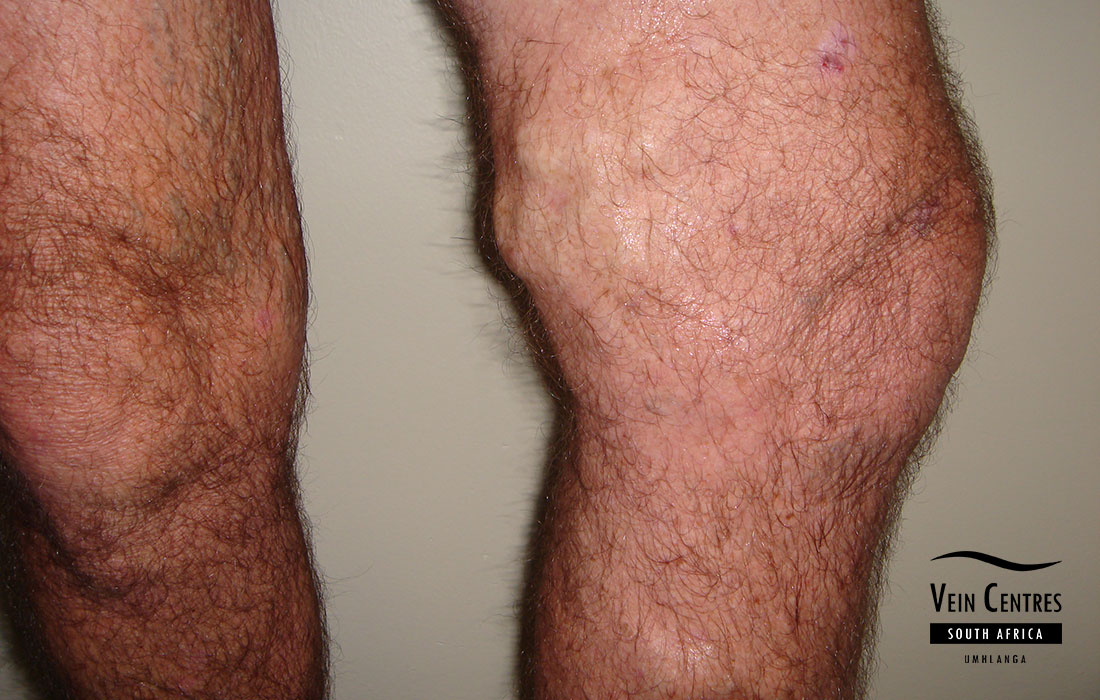
Broken one-way valves in the legs will cause blood to flow back through the vein and pool in the lower legs, this is known as venous reflux, and often presents as varicose veins. Varicose veins are large blue tortuous vessels that bulge from the surface of the skin.
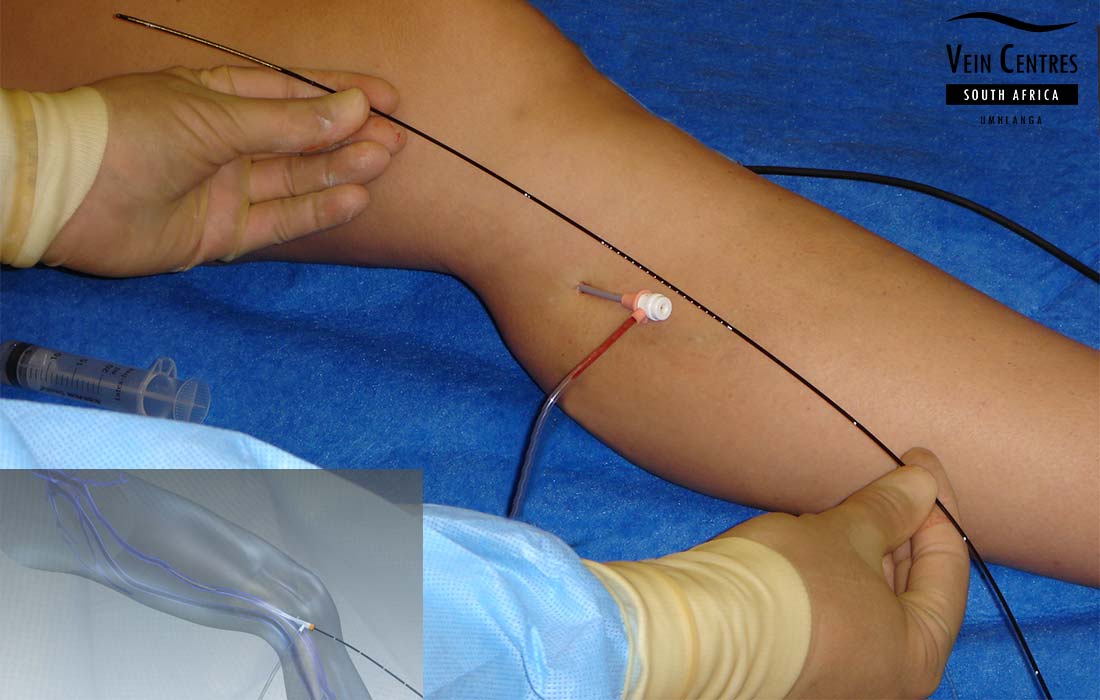
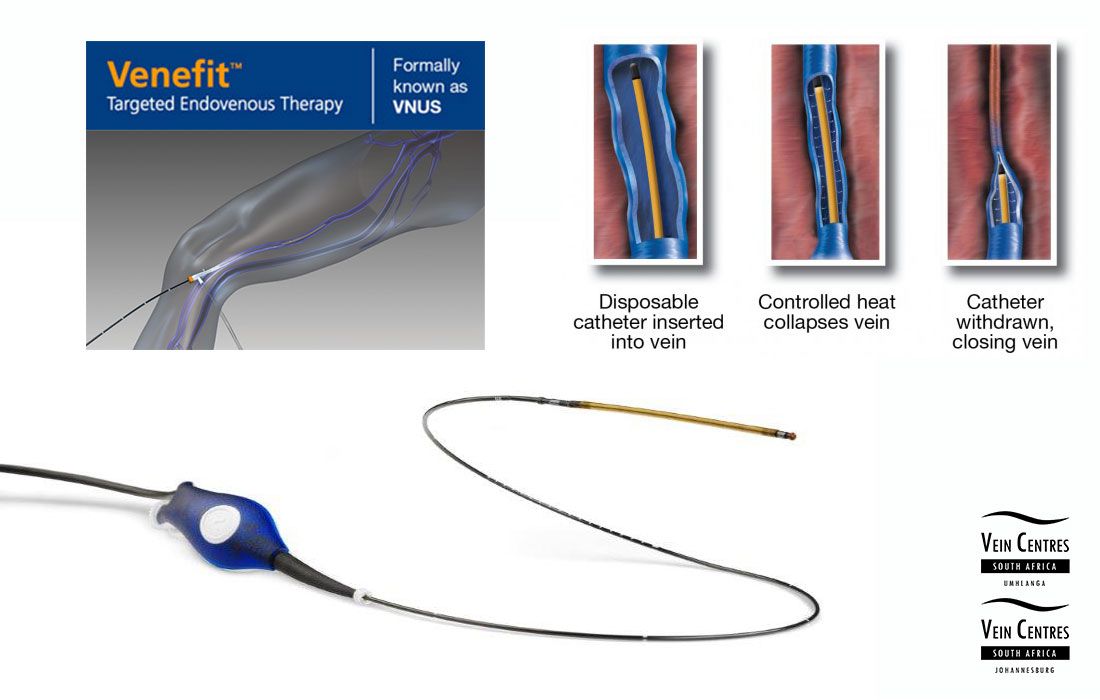
VENEFIT™ Procedure
What is endovenous radiofrequency ablation?
Radiofrequency ablation is a minimally invasive treatment for varicose veins and Chronic Venous Insufficiency (CVI) in which a vein specialist inserts a radiofrequency ablation catheter to collapse and close enlarged leg veins using heat. After the vein is sealed shut, blood then naturally re-routes to healthy veins.
How does it work?
The procedure is performed in an office operating room under local anaesthetic, minimal preparation by the patient is required. It truly is a walk-in walk-out procedure that takes 20-40 minutes to perform. The procedure does not require hospital admission or a general anaesthetic. Performing it under local anaesthetic in our rooms avoids the additional preparation, recovery time and cost that a general anaesthetic and a hospital admission involve.
Before the procedure, Dr Blignaut maps out the leg veins to be treated prior to surgery using a duplex ultrasound. During the procedure, a small needle is inserted just below the knee. (This needle is the same size as a regular drip in the arm). This needle is replaced by a plastic cannula that allows for the passage of the ablation catheter into the vein. A dilute mixture of saline and local anaesthetic is injected around the vein, this is known as tumescent anaesthesia. Once complete, the catheter is activated and a precise amount of heat energy is delivered to the vein wall. The collagen in the vein wall shrinks, as the ablation proceeds, leaving a closed and sealed vein. Upon completion, the catheter is removed from the leg and a layered bandage applied. Most patients report little or manageable discomfort during the procedure. Mild tenderness, bruising or soreness may occur afterwards. For anxious or needle phobic patients we can give a mild intravenous sedative before or during the procedure. Patients leave the room once the procedure is complete. If no sedation was used, they may drive themselves home.
The applied bandage is removed 24 hours later. You will be encouraged to walk every day, but to refrain from strenuous activity for at least a week. Most patients who undergo radiofrequency ablation of their varicose veins typically resume normal activities within a day or two.
Is Radiofrequency ablation right for me?
Endovenous thermal ablation has replaced traditional open surgery for many suitable patients, because it can usually be performed under local anaesthetic through a needle puncture rather than incisions, with less post-procedure pain and an earlier return to normal activity. Current international guidelines from both the European Society for Vascular Surgery and the Society for Vascular Surgery recommend endovenous ablation in preference to high ligation and stripping for symptomatic reflux in the great and small saphenous veins.12
Open surgery is now rarely indicated, but it remains an appropriate option in selected cases, for example where the venous anatomy precludes endovenous treatment, or where endovenous expertise and technology are not available. Those same guidelines recommend ligation and stripping in exactly those circumstances.2 Which approach suits you depends on your individual anatomy, your symptoms and any previous treatment, and is decided after your duplex scan rather than in advance.
Patients with superficial vein reflux, as demonstrated on a duplex scan, are ideal candidates for this procedure. Deep venous reflux, usually the result of a previous DVT, may influence whether superficial vein treatment is appropriate and is assessed individually on duplex ultrasound. The only way to determine whether radiofrequency ablation is suitable for you is to have a duplex scan performed by a vein specialist.
Your assessment is performed by Dr Johan Blignaut and includes duplex mapping before treatment is recommended. Treatment is selected according to your venous anatomy, not simply according to the veins visible on the skin.
Radiofrequency ablation has been in clinical use since 1999 and is now widely regarded as a first line treatment for superficial truncal reflux.
Pricing and Medical Schemes
Funding for vein treatment depends on your medical scheme, your benefit option, the clinical indication for treatment, the specific procedure performed, and your scheme’s authorisation requirements. Because these vary from patient to patient and change from year to year, we do not publish scheme-by-scheme cover.
We submit the authorisation request to your scheme on your behalf. Any estimated shortfall is payable on the day of your procedure. Where authorisation has not been obtained beforehand, payment is required in full and you can then claim from your scheme. If you are not on a medical scheme we will provide you with a detailed written quote.
For current scheme and pricing information, please see our medical schemes and pricing page, or contact your nearest vein centre and we will check your specific benefits.
Radiofrequency ablation at Vein Centres South Africa
Animated Procedure Video
Patient experience
Vein stripping surgery
Ligation and stripping is the traditional open operation for varicose veins, in which the saphenous vein is tied off at the groin and physically removed from the leg. It is performed under general or spinal anaesthetic and usually involves a hospital admission. It is not offered at our vein centres, as endovenous ablation is suitable for the great majority of patients, but it remains a recognised procedure and is still appropriate in selected cases.
If you would like to see how the operation is carried out, this video demonstrates vein stripping surgery. Please note that it contains footage of an operation.
References
- Gloviczki P, Lawrence PF, Wasan SM, et al. The 2022 Society for Vascular Surgery, American Venous Forum, and American Vein and Lymphatic Society clinical practice guidelines for the management of varicose veins of the lower extremities. Part I. J Vasc Surg Venous Lymphat Disord. 2023;11(2):231–61. Journal
- De Maeseneer MG, Kakkos SK, Aherne T, et al. European Society for Vascular Surgery (ESVS) 2022 clinical practice guidelines on the management of chronic venous disease of the lower limbs. Eur J Vasc Endovasc Surg. 2022;63(2):184–267. ESVS guideline
- Lurie F, Creton D, Eklof B, et al. Prospective randomised study of endovenous radiofrequency obliteration (Closure) versus ligation and vein stripping (EVOLVeS): two year follow up. Eur J Vasc Endovasc Surg. 2005;29(1):67–73. PubMed 15570274
Not sure which treatment is right for you? See our side-by-side comparison of radiofrequency ablation, EVLA, VenaSeal and foam sclerotherapy, and how the choice is made.
Written and medically reviewed by Dr Johan Blignaut, MBChB (UOFS), FCS(SA)SURG, Specialist Surgeon.
Last medically reviewed: August 2026. This page is reviewed periodically and updated when clinical practice changes. It is general information, not medical advice – see our terms and medical disclaimer.